%20--%3e%3crect%20x='1020.133'%20y='137.663'%20width='64.476'%20height='76.118'%20fill='%23008f97'/%3e%3cpath%20d='M1400.664,454.669h-117.108c-28.781,37.37-56.467,58.911-99.336,58.911h0c-22.794,0-55.624-6.553-77.468-63.212-14.693-38.107-22.143-93.03-22.143-163.241h-64.474c0,70.209-7.449,125.133-22.143,163.241-21.642,56.129-54.056,63.08-76.821,63.205-31.677-.065-63.996-24.4-89.21-66.993,53.24-69.506,82.369-158.871,82.369-253.747,0-53.253-5.951-96.245-17.687-127.788C875.582,8.45,839.22,0,819.417,0c-27.709,0-65.11,14.43-85.936,83.177-13.598,44.896-16.453,100.105-16.453,138.511,0,81.793,13.129,155.198,38.218,215.002-38.39,38.344-98.925,76.89-187.116,76.89-11.478,0-22.148-.643-32.059-1.849,59.345-33.063,105.781-78.051,105.781-133.919,0-30.047-11.345-56.928-32.806-77.735-24.98-24.217-61.04-37.426-98.999-36.253-98.692,3.06-150.774,80.266-149.671,151.355.483,31.229,10.355,60.69,28.34,85.697-31.539,8.357-59.408,12.704-77.245,12.704-27.265,0-36.054-17.384-47.029-93.001-4.784-32.965-9.732-67.051-23.543-94.981-18.4-37.211-50.072-56.88-91.593-56.88-29.329,0-59.475,12.018-84.932,39.989V77.175H0v492.19h64.374v-23.597c0-146.122,44.026-212.676,84.932-212.676,28.512,0,39.325,13.341,51.429,96.732,4.665,32.139,9.488,65.373,22.615,92.43,22.334,46.037,60.247,55.7,88.121,55.7,29.771,0,81.278-9.3,134.888-27.297,33.459,17.949,74.83,27.297,121.771,27.297,82.356,0,158.427-29.005,218.606-82.549,36.247,53.175,83.064,82.226,133.786,82.521v.028c.188,0,.382-.007.571-.008.07,0,.138.008.208.008v-.01c41.865-.199,97.19-16.68,131.071-90.941,34.088,74.718,89.893,90.951,131.848,90.951,76.707,0,121.934-44.343,157.889-93.784,35.956,49.441,81.183,93.784,157.891,93.784v-64.374C1457.13,513.58,1429.444,492.039,1400.664,454.669ZM454.914,478.873c-20.865-18.799-29.83-42.635-30.171-64.692-.849-54.665,43.276-84.65,87.298-86.014.874-.027,1.739-.041,2.605-.041,19.374,0,37.761,6.702,49.589,18.169,8.786,8.518,13.242,19.123,13.242,31.517,0,28.341-37.533,62.547-100.399,91.504C469.764,472.685,462.354,475.872,454.914,478.873ZM801.996,376.033c-13.444-45.067-20.594-97.82-20.594-154.345,0-107.316,22.685-157.314,38.015-157.314,10.649,0,30.538,37.681,30.538,128.459C849.955,259.731,833.167,323.107,801.996,376.033Z'%20fill='%23008f97'/%3e%3cpath%20d='M1342.109,369.985c-35.955-49.442-81.182-93.786-157.889-93.786v64.376c42.869,0,70.555,21.541,99.336,58.909h117.107c28.781-37.368,56.467-58.909,99.337-58.909v-64.376C1423.292,276.199,1378.065,320.543,1342.109,369.985Z'%20fill='%23008f97'/%3e%3c/svg%3e)
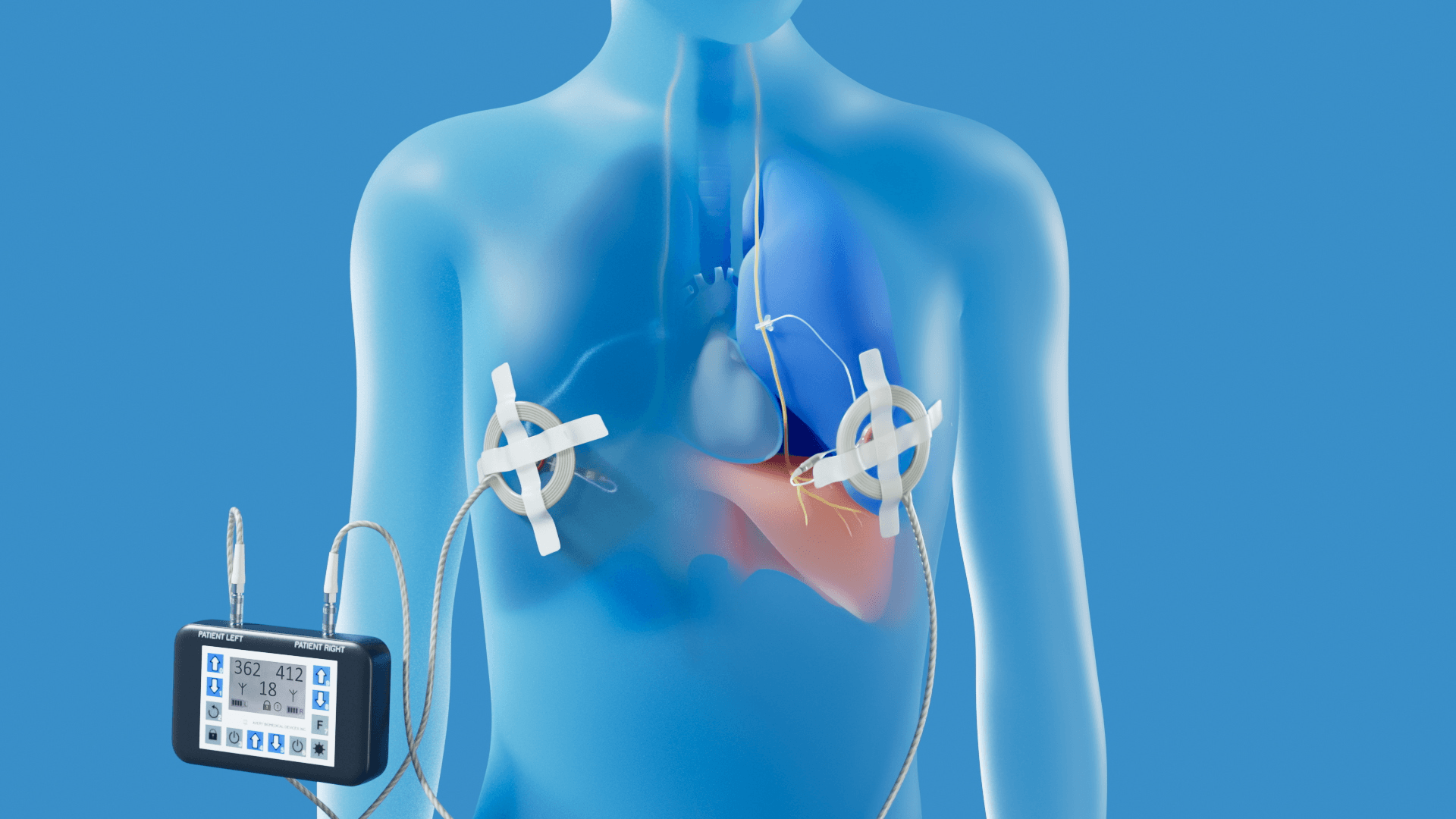
Every so often, a project reminds us why we do this work. Our latest one: a 3D animation for Avery Biomedical Devices, visualizing how their Diaphragm Pacing System helps patients breathe without a ventilator.
Here's the science in short: the phrenic nerve carries the signal that tells your diaphragm to contract. When that signal is interrupted - by a spinal cord injury, central sleep apnea, or a paralyzed diaphragm - breathing has to be supported another way. Avery's system, in use since the early 1970s in more than 40 countries, delivers a small electrical pulse directly to the phrenic nerve, causing the diaphragm to contract rhythmically - much closer to natural breathing than positive-pressure ventilation.
The brief for this one was refreshingly human: make it warm and easy to follow, because the audience includes pediatric patients and their families, not just clinicians. We worked from the client's own storyboard and technical reference material, shaping it into a flowing story - from how the system is implanted, to how it's powered, to the breathing cycle it produces - without losing a single detail of accuracy along the way.
The final package: a 2-minute hero animation, three shorter cuts, and 15 stills ready for hospital settings, education materials, and digital use.
It's a good example of what we enjoy most - taking something genuinely life-changing and making it instantly understandable, for the people who need to understand it most. → See the mini case study on our portfolio